River Birch vs Common Cattail - TreeTime.ca

River Birch vs Common Cattail

Betula nigra

Typha latifolia

NOT AVAILABLE THIS SEASON - MIGHT RETURN

CUSTOM GROW
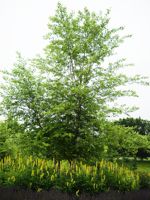
River Birch
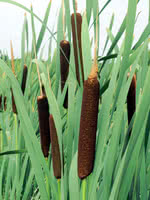
Common Cattail

River Birch has beautiful, peeling, brown bark that reveals camel-colored and pink beneath. It is more borer resistant than white bark birches, which makes it a much longer-lived landscape tree.

Cattail is found all across North America, growing next to water. Like other waterside plants, Cattail provides erosion control and forage for animals.

It is suitable for land reclamation. Cattail is able to tolerate cold weather and occasional flooding.

River Birch Quick Facts

Common Cattail Quick Facts

Zone: 3a
Zone: 1a
Height: 12 m (39 ft)
Height: 2.4 m (8 ft)
Spread: 5 m (16 ft)
Spread: 1.5 m (5 ft)
Light: full sun
Light: partial shade, full sun
Moisture: normal, wet
Moisture: wet
Growth rate: fast
Growth rate: fast
Life span: medium
Life span: short
Suckering: low
Suckering: medium


Foliage: thick, flat
Bark: dark gray-brown or pinkish-brown and scaly
Flowers: yellow and green
Seeds: tiny winged seeds located within the catkins
Hybrid: no
Hybrid: no
Catkins: yes
Catkins: no


Native to: AB, BC, SK, MB, ON, QC, NS, NB, NL, YT, NT, NU, PE
Other Names: black birch, water birch
Other Names: baco, bulrush, cat o nine tails, cossack asparagus, flag, reed mace, rush