 Owned
Owned

Mon-Fri 9am - 5pm Mountain time
Cart reopens in October
Subscribe to our email list
to stay updated
Emerald Cedar vs Sweet Gale
Thuja occidentalis Smaragd
Myrica gale
COMING SOON
(new stock expected: fall of 2026)
CUSTOM GROW
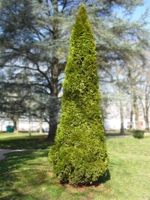
Emerald Cedar makes a great addition to landscapes, and is often used to form tight hedges or privacy screens. The thick scale-like foliage adds texture and colour to yards and is commonly used to line driveways. Unlike other cedars it retains its green colour throughout the fall and winter.
It is a semi dwarf species, which generally needs little pruning, but if desired it responds well to trimming. Its attractive, columnar shape and dense foliage makes it a desired landscape feature.
The Emerald Cedar won the award of merit from the Royal Horticultural Society.
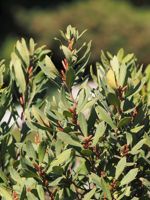
Sweet Gale is a native, nitrogen-fixing shrub known for its aromatic foliage. Tiny glands on the leaves release a balmy, bay leaf-like scent with floral and citrus notes. In spring, the yellowish male catkins provide one of the earliest sources of pollen for bees and other insects. While later in the season, the female catkins produce seeds that are eaten by waterfowl. Sweet Gale is dioecious, meaning male and female flowers occur on separate plants.
Sweet Gale thrives in wet, acidic soils and is commonly found along wetlands and lakeshores. It can help stabilize shorelines, while its dense growth provides valuable cover for wildlife. It is well-suited for naturalization, wetland restoration, and erosion control projects.