 Owned
Owned

Yarrow vs Lewis Mock Orange
Philadelphus lewisii
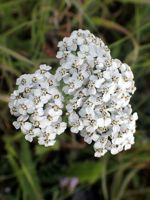
Achillea borealis (Previously Achillea millefolium)
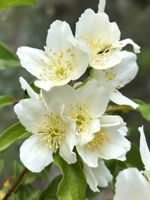
Lewis Mock Orange is a flowering ornamental shrub that produces an abundance of white, fragrant blooms. The flowers have a sweet scent similar to orange blossoms, with a hint of pineapple. They bloom for several weeks from late spring to early summer, attracting pollinators and other beneficial insects.
Native to North America, Lewis Mock Orange is found from the southernmost portions of Alberta and British Columbia, and south into the northwestern United States. It makes an attractive shrub and can be used in hedgerows, pollinator gardens, and naturalization projects. Blooms occur on the previous year’s wood, so it is recommended to prune after it has finished flowering.
Yarrow is a herbaceous, native wildflower that is found across Canada. It features large, flat clusters of tiny white flowers. The blooms attract a variety of pollinators, making it an ideal choice for pollinator gardens. While partial shade is tolerated, the best flowering occurs in full sun. Yarrow is resistant to deer and rabbits, making it both a beautiful and practical addition to your landscape.
The entire plant is edible, but leaves and flowers are most commonly consumed. They have a strong licorice scent and a mild sweet flavor that is similar to tarragon. Yarrow leaves can also be used as a natural insect repellent.
It is important to plant Yarrow in the right place, it can spread quickly via both rhizomes and self-seeding. Deadheading the spent flowers will extend the bloom season and can help limit self-seeding.
Lewis Mock Orange Quick Facts
Yarrow Quick Facts
Toxicity: toxic to dogs, cats, and horses