 Owned
Owned

Mon-Fri 9am - 5pm Mountain time
Cart reopens in October
Subscribe to our email list
to stay updated
Bracted Honeysuckle vs Emerald Cedar
Lonicera involucrata
Thuja occidentalis Smaragd
NOT AVAILABLE THIS SEASON - MIGHT RETURN
COMING SOON
(new stock expected: fall of 2026)
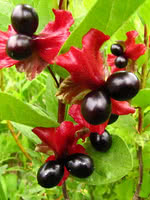
Bracted Honeysuckle is a shade loving shrub that is distinguishable from other honeysuckles by its square stem and pointed leaves. Native to most of North America, this honeysuckle is found along swamps, rivers, riparian zones and moist wooded areas.
If you have a erosion control project in mind, consider Bracted Honeysuckle.
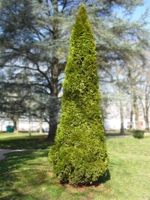
Emerald Cedar makes a great addition to landscapes, and is often used to form tight hedges or privacy screens. The thick scale-like foliage adds texture and colour to yards and is commonly used to line driveways. Unlike other cedars it retains its green colour throughout the fall and winter.
It is a semi dwarf species, which generally needs little pruning, but if desired it responds well to trimming. Its attractive, columnar shape and dense foliage makes it a desired landscape feature.
The Emerald Cedar won the award of merit from the Royal Horticultural Society.