 Owned
Owned

Green Alder vs Bog Birch
Alnus alnobetula subsp. crispa
Betula pumila
NOT AVAILABLE THIS SEASON - MIGHT RETURN
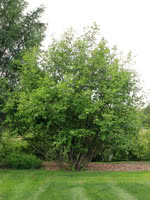
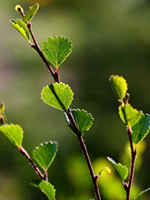
Green Alder is a native, cold-hardy shrub found in boreal forests, along slopes, and in open upland habitats. It fixes nitrogen in the soil, improving fertility and helping other plants grow, while its roots help stabilize slopes and disturbed ground. Fast to establish on poor soils, it is widely used in reclamation, restoration, and erosion control projects.
With its smooth grey bark and shiny green leaves, Green Alder often forms dense thickets that provide cover for birds and small mammals. Its seeds, buds, and catkins also supply food for wildlife. Green Alder is well suited for naturalization and ecological restoration.
Note: We use Green Alder for Alnus alnobetula subsp. crispa. This species is also known by many other common names, including Mountain Alder, Sitka Alder, and others. Please confirm the scientific name to ensure you are ordering the correct plant.
Bog Birch is a hardy, deciduous shrub native to North America. It thrives in wetlands, riparian zones, and boreal forests, and can be found as far north as the Arctic Circle—making it one of the few woody plants to grow in such extreme climates.
In Western Canada, it is especially common in moist lowlands, along streambanks, and in peatlands. Beyond its ecological role in stabilizing soils and supporting wildlife, Bog Birch is frequently used in reclamation and restoration projects due to its resilience and ability to establish quickly in disturbed or degraded landscapes.
Note: We use Bog Birch for Betula pumila. This species is also known by many other common names, including Dwarf Birch, Swamp Birch, and others. Please confirm the scientific name to ensure you are ordering the correct plant.
Green Alder Quick Facts
Bog Birch Quick Facts
In row spacing: 0.9 m (3 ft)