 Owned
Owned

Wood Lily vs Canada Anemone
Lilium philadelphicum
Anemonastrum canadense (Anemone canadensis)
CUSTOM GROW
NOT AVAILABLE THIS SEASON - MIGHT RETURN
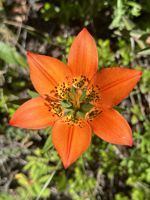
Wood Lily is a native perennial wildflower known for its vibrant, trumpet-shaped blooms in shades of orange to red. Its showy flowers appear mid-summer and are highly visible in meadows and prairies. The upward-facing flowers are an important nectar source for many pollinators, including native bees, butterflies, and hummingbirds.
Unlike most lilies, the Wood Lily’s flowers face upward rather than nodding. It is slow to establish and may take years before flowering, but once mature, it requires little maintenance. It is well-suited for pollinator gardens, naturalisation projects, prairie restoration, and open woodland plantings.
Wood Lily is the provincial flower of Saskatchewan and North America’s most widespread lily. Despite its wide natural range, populations have been declining. Habitat loss, overgrazing by deer, and unsustainable picking have reduced both its abundance and density across many regions. These pressures highlight the importance of protecting and restoring this once-common wildflower.
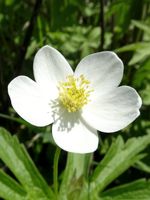
Canada Anemone is a native perennial wildflower known for its white, buttercup-like flowers. Blooming from mid-spring to early summer, it attracts a variety of pollinators, including bees, butterflies, and other beneficial insects. Its deep green foliage, characterized by deeply cut leaves with sharply toothed edges, adds texture and visual interest to the landscape even when the plant is not in bloom.
Canada Anemone grows naturally in moist meadows, forest edges, and riparian zones. Spreading rapidly through underground rhizomes, it forms large colonies that can help stabilize soil. It is well-suited to naturalization and restoration projects, including revegetating difficult, wet sites. Also suitable for rain gardens and pollinator gardens, but extra care and maintenance may be required to control its spread in smaller urban yards.