 Owned

Twinflower vs Yellow Hedysarum
Hedysarum sulphurescens
Linnaea borealis
CUSTOM GROW
CUSTOM GROW
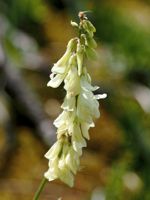
Yellow Hedysarum is a native perennial wildflower recognized for its clusters of pale yellow to creamy-white, pea-like blooms. Flowering from late spring into summer, it adds subtle colour to grasslands, roadsides, and open woods while attracting a variety of pollinators, especially bumblebees.
As a nitrogen-fixing plant, Yellow Hedysarum enriches soils and supports the growth of surrounding vegetation. Its deep taproot and extensive root system make it drought-tolerant and effective at stabilizing soil. Grizzly bears are known to dig up and eat the nutritious taproot. Its resilience and ecological value make it well-suited for restoration, naturalization, pollinator gardens, and erosion control projects.
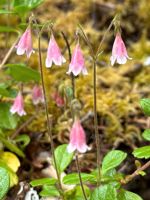
Twinflower is a native, trailing evergreen ground cover known for its delicate flowers that grow in nodding pairs. These pale pink blooms are described as being sweetly fragrant, attracting native bees and other pollinators.
Growing in cool, moist, acidic soils, the trailing stems form roots as they spread and start to form mats across the forest floor. Due to its woody stem, it is technically classified as a shrub and often referred to as a subshrub or dwarf shrub. This species is well-suited for naturalization, restoration, and conservation projects.
Twinflower (Linneae borealis) was named in honour of Carl Linnaeus, who adopted it as his personal emblem.