 Owned
Owned

Round-Leaved Sundew vs Bebbs Sedge
Drosera rotundifolia
Carex bebbii
CUSTOM GROW
NOT AVAILABLE THIS SEASON - MIGHT RETURN
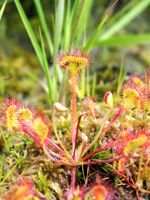
Round-Leaved Sundew is a native carnivorous plant, easily recognized by its bright green leaves covered in distinctive red, glandular hairs. These hairs secrete a sticky substance that is used to attract, trap, and digest insects. Their carnivorous nature allows them to survive in nutrient-poor, acidic soils where many other plants may struggle to grow.
They produce small white flowers that grow along the top of a slender, leafless stem. They can be found growing in wetlands, most often among sphagnum moss, in consistently moist, acidic soils. It does best in cooler summer climates and is intolerant of shade. Due to its small size, the plant can be difficult to spot in its natural habitat. Round-Leaved Sundew is an indicator of healthy wetland systems and is valued in ecological restoration and conservation projects.
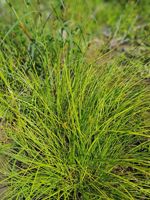
Bebb’s Sedge is a native perennial wetland plant that forms dense clumps of grass-like stems. It grows in a variety of wetland habitats, from marshes and wet meadows to lakeshores and stream banks. Ideal for rain gardens, riparian restoration, soil stabilization, and naturalization projects.
In late spring and early summer, Bebb’s Sedge produces clustered seed heads that mature from green to reddish-brown, adding seasonal interest while providing food and habitat for wildlife. As a cool-season plant, it grows most actively in the spring and as temperatures cool in the fall.