 Owned
Owned

Purple Pitcher Plant vs Bebbs Sedge
Sarracenia purpurea
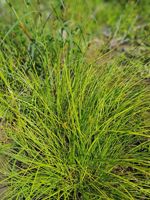
Carex bebbii
CUSTOM GROW
NOT AVAILABLE THIS SEASON - MIGHT RETURN
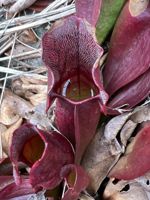
Purple Pitcher Plant is a native carnivorous plant, easily recognized by its purple-tinged, tubular pitchers that capture and digest insects. The nectar along the rim attracts insects to the pitcher, where slippery surfaces and downward-pointing hairs cause them to fall into the fluid below. Once inside, they are broken down, providing nutrients that allow the plant to thrive in nutrient-poor soils.
The plant produces nodding, purple-red flowers held high above the leaves. Interestingly, these blooms are pollinated by the Pitcher Plant Fly (Fletcherimyia fletcheri), whose larvae live in the fluid of the pitchers and feed on some of the trapped insects. It can be found in bogs, fens, and other wetlands. It is well-suited for wetland gardens, restoration, and naturalisation projects.
The Purple Pitcher Plant can be challenging to grow because of its specific requirements. It thrives in consistently moist (but not waterlogged), acidic soil, with a peat-and-sand mix typically recommended. The plant is sensitive to fertilizers, dissolved salts, and chlorinated water. When given the right conditions, full sun will bring out its brightest colors.
The Purple Pitcher Plant is the provincial flower of Newfoundland & Labrador.
Bebb’s Sedge is a native perennial wetland plant that forms dense clumps of grass-like stems. It grows in a variety of wetland habitats, from marshes and wet meadows to lakeshores and stream banks. Ideal for rain gardens, riparian restoration, soil stabilization, and naturalization projects.
In late spring and early summer, Bebb’s Sedge produces clustered seed heads that mature from green to reddish-brown, adding seasonal interest while providing food and habitat for wildlife. As a cool-season plant, it grows most actively in the spring and as temperatures cool in the fall.