 Owned
Owned

Mon-Fri 9am - 5pm Mountain time
Cart reopens in October
Subscribe to our email list
to stay updated
Small Cranberry vs Yellow Hedysarum
Vaccinium oxycoccos
Hedysarum sulphurescens
CUSTOM GROW
CUSTOM GROW
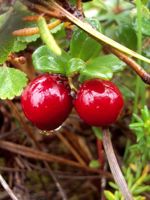
Small Cranberry is a native evergreen groundcover found in bogs, fens, and wet meadows. It produces delicate pink flowers that attract a variety of pollinators, including bees, and it serves as both a nectar source and host plant for the Bog Fritillary (Boloria eunomia) butterfly. By late summer, the plant bears deep red berries that are eaten by both wildlife and people. With their high pectin content, the berries are well-suited for making jams and jellies.
Often creeping among sphagnum moss, Small Cranberry thrives in cold, acidic, and nutrient-poor soils (pH 2.9–4.7), making it well adapted to northern wetland environments. With its woody stems, it is technically classified as a shrub and often described as a subshrub or dwarf shrub. It is also valuable for wetland restoration and naturalisation projects.
Note: We use Small Cranberry for Vaccinium oxycoccos. This species is also known by many other common names, including Bog Cranberry, Small Bog Cranberry, and others. Please confirm the scientific name to ensure you are ordering the correct plant.
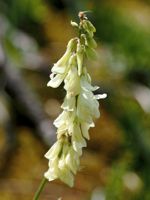
Yellow Hedysarum is a native perennial wildflower recognized for its clusters of pale yellow to creamy-white, pea-like blooms. Flowering from late spring into summer, it adds subtle colour to grasslands, roadsides, and open woods while attracting a variety of pollinators, especially bumblebees.
As a nitrogen-fixing plant, Yellow Hedysarum enriches soils and supports the growth of surrounding vegetation. Its deep taproot and extensive root system make it drought-tolerant and effective at stabilizing soil. Grizzly bears are known to dig up and eat the nutritious taproot. Its resilience and ecological value make it well-suited for restoration, naturalization, pollinator gardens, and erosion control projects.