 Owned
Owned

Yarrow vs Nuttalls Sunflower
Achillea borealis (Previously Achillea millefolium)
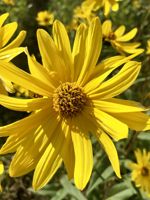
Helianthus nuttallii
NOT AVAILABLE THIS SEASON - MIGHT RETURN
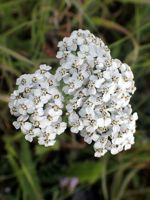
Yarrow is a herbaceous, native wildflower that is found across Canada. It features large, flat clusters of tiny white flowers. The blooms attract a variety of pollinators, making it an ideal choice for pollinator gardens. While partial shade is tolerated, the best flowering occurs in full sun. Yarrow is resistant to deer and rabbits, making it both a beautiful and practical addition to your landscape.
The entire plant is edible, but leaves and flowers are most commonly consumed. They have a strong licorice scent and a mild sweet flavor that is similar to tarragon. Yarrow leaves can also be used as a natural insect repellent.
It is important to plant Yarrow in the right place, it can spread quickly via both rhizomes and self-seeding. Deadheading the spent flowers will extend the bloom season and can help limit self-seeding.
Nuttall’s Sunflower is a native perennial wildflower known for its bright, golden-yellow blooms. Flowering from mid to late summer, it offers a late-season nectar source for various bees, butterflies, and other pollinators, while the seeds provide a fall food source for birds. The upright growth habit adds structural height and visual variety to your landscape.
Nuttall’s Sunflower can be found growing in moist to wet meadows, prairies, and open spaces. It can spread quickly via underground rhizomes, making it ideal for large-scale plantings. It is well-suited for naturalization, soil stabilization, riparian zones, and wetland restoration projects. If planting in smaller urban yards or gardens, extra care and maintenance will be required to limit its spread.
Yarrow Quick Facts
Nuttalls Sunflower Quick Facts
Toxicity: toxic to dogs, cats, and horses