 Owned
Owned

Mon-Fri 9am - 5pm Mountain time
Cart reopens in October
Subscribe to our email list
to stay updated
Yarrow vs Small Cranberry
Vaccinium oxycoccos
Achillea borealis (Previously Achillea millefolium)
CUSTOM GROW
COMING SOON
(new stock expected: fall of 2026)
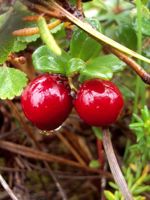
Small Cranberry is a native evergreen groundcover found in bogs, fens, and wet meadows. It produces delicate pink flowers that attract a variety of pollinators, including bees, and it serves as both a nectar source and host plant for the Bog Fritillary (Boloria eunomia) butterfly. By late summer, the plant bears deep red berries that are eaten by both wildlife and people. With their high pectin content, the berries are well-suited for making jams and jellies.
Often creeping among sphagnum moss, Small Cranberry thrives in cold, acidic, and nutrient-poor soils (pH 2.9–4.7), making it well adapted to northern wetland environments. With its woody stems, it is technically classified as a shrub and often described as a subshrub or dwarf shrub. It is also valuable for wetland restoration and naturalisation projects.
Note: We use Small Cranberry for Vaccinium oxycoccos. This species is also known by many other common names, including Bog Cranberry, Small Bog Cranberry, and others. Please confirm the scientific name to ensure you are ordering the correct plant.
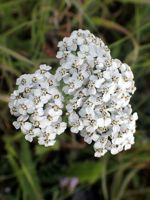
Yarrow is a herbaceous, native wildflower that is found across Canada. It features large, flat clusters of tiny white flowers. The blooms attract a variety of pollinators, making it an ideal choice for pollinator gardens. While partial shade is tolerated, the best flowering occurs in full sun. Yarrow is resistant to deer and rabbits, making it both a beautiful and practical addition to your landscape.
The entire plant is edible, but leaves and flowers are most commonly consumed. They have a strong licorice scent and a mild sweet flavor that is similar to tarragon. Yarrow leaves can also be used as a natural insect repellent.
It is important to plant Yarrow in the right place, it can spread quickly via both rhizomes and self-seeding. Deadheading the spent flowers will extend the bloom season and can help limit self-seeding.
Small Cranberry Quick Facts
Yarrow Quick Facts
Toxicity: toxic to dogs, cats, and horses