 Owned
Owned

Common Hackberry vs Yellow Birch
Celtis occidentalis
Betula alleghaniensis
NOT AVAILABLE THIS SEASON - MIGHT RETURN
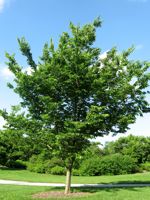
The Common Hackberry is a medium-sized deciduous tree that resembles the American Elm but is immune to Dutch Elm Disease. They are versatile and can adapt to a variety of growing conditions.
It produces purple-red, berry-like fruit with a large seed in the center. Both the sweet flesh, which tastes similar to dates, and the crunchy seed are edible. The fruit remains on the tree throughout the winter, offering a valuable food source for birds and other wildlife.
The Common Hackberry can also be a great addition to a pollinator garden. The tree itself is a host for the larvae of several butterfly species and the flowers provide a source of pollen and nectar.
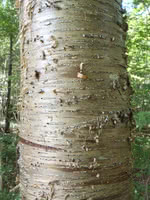
Yellow Birch is a large and valuable hardwood species in northeastern North America. The bark on its limbs and young trunks is silvery-yellowish in colour, hence the name. This tree prefers to grow in cool regions with damp or saturated soil.
Yellow Birch can be tapped for syrup, like Sugar Maple. Although the sap has less sugar content, it flows in greater quantity than maple trees.