 Owned
Owned

Bracted Honeysuckle vs Falsebox
Lonicera involucrata
Paxistima myrsinites
NOT AVAILABLE THIS SEASON - MIGHT RETURN
CUSTOM GROW
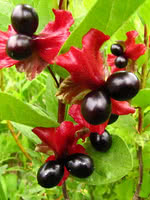
Bracted Honeysuckle is a shade loving shrub that is distinguishable from other honeysuckles by its square stem and pointed leaves. Native to most of North America, this honeysuckle is found along swamps, rivers, riparian zones and moist wooded areas.
If you have a erosion control project in mind, consider Bracted Honeysuckle.
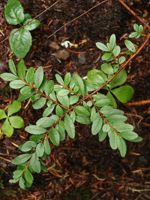
Falsebox is a hardy, native evergreen shrub found in forests, rocky slopes, and open woodland sites. Though small and easily overlooked among the leaves, the maroon flowers still supply nectar and pollen for pollinators such as native bees and flies. Blooming in spring, they provide an important early-season food source. Its year-round greenery adds visual interest through the winter.
Falsebox is a low-growing shrub that tolerates a wide range of conditions, including drought once established. It thrives particularly well beneath the shade of mature trees, where few other plants succeed. With its resilience and ecological value, Falsebox is well-suited for naturalization, restoration projects, and diverse landscape plantings.