 Owned
Owned

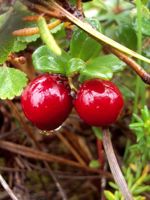
Bunchberry vs Small Cranberry
Cornus canadensis
Vaccinium oxycoccos
NOT AVAILABLE THIS SEASON - MIGHT RETURN
CUSTOM GROW
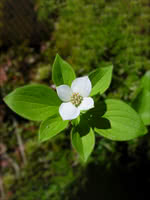
The Bunchberry, or Quatre-Temps as it is commonly known in Quebec, is an excellent ornamental plant to have in your garden. With star-shaped white flowers in spring and clusters of bright red berries in the fall, this is one of the most refined and hardy groundcovers available. The foliage has ornamental value, with leaves going from a deep green in the spring and summer to a beautiful brick-red in the fall.
Bunchberry is a spreading evergreen perennial with a ground-hugging habit of growth. This plant is not well suited for urban areas close to streetsides, as it is quite intolerant to pollution. It is Canada’s national flower.
According to a poll done by the Master Gardeners of Ontario, it is one of the most recognizable Canadian flowers.
Its flowers grow with elastic petals and "fire" its pollen with the force of 2000-3000 times the force of gravity.
Small Cranberry is a native evergreen groundcover found in bogs, fens, and wet meadows. It produces delicate pink flowers that attract a variety of pollinators, including bees, and it serves as both a nectar source and host plant for the Bog Fritillary (Boloria eunomia) butterfly. By late summer, the plant bears deep red berries that are eaten by both wildlife and people. With their high pectin content, the berries are well-suited for making jams and jellies.
Often creeping among sphagnum moss, Small Cranberry thrives in cold, acidic, and nutrient-poor soils (pH 2.9–4.7), making it well adapted to northern wetland environments. With its woody stems, it is technically classified as a shrub and often described as a subshrub or dwarf shrub. It is also valuable for wetland restoration and naturalisation projects.
Note: We use Small Cranberry for Vaccinium oxycoccos. This species is also known by many other common names, including Bog Cranberry, Small Bog Cranberry, and others. Please confirm the scientific name to ensure you are ordering the correct plant.