 Owned
Owned

Mon-Fri 9am - 5pm Mountain time
Cart reopens in October
Subscribe to our email list
to stay updated
Bunchberry vs Junegrass
Cornus canadensis
Koeleria macrantha
NOT AVAILABLE THIS SEASON - MIGHT RETURN
NOT AVAILABLE THIS SEASON - MIGHT RETURN
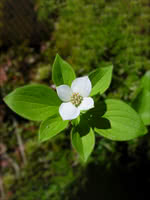
The Bunchberry, or Quatre-Temps as it is commonly known in Quebec, is an excellent ornamental plant to have in your garden. With star-shaped white flowers in spring and clusters of bright red berries in the fall, this is one of the most refined and hardy groundcovers available. The foliage has ornamental value, with leaves going from a deep green in the spring and summer to a beautiful brick-red in the fall.
Bunchberry is a spreading evergreen perennial with a ground-hugging habit of growth. This plant is not well suited for urban areas close to streetsides, as it is quite intolerant to pollution. It is Canada’s national flower.
According to a poll done by the Master Gardeners of Ontario, it is one of the most recognizable Canadian flowers.
Its flowers grow with elastic petals and "fire" its pollen with the force of 2000-3000 times the force of gravity.
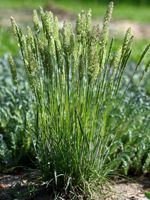
Junegrass is a native, low-growing perennial bunchgrass commonly found in prairies and open woodlands. It is a great choice for prairie restoration and naturalization projects or an attractive accent in ornamental plantings. Spear-shaped seed heads rise above the gray-green lower leaves, maturing to a tan color. Flowering earlier than other upright prairie grasses, it greens up quickly in spring and maintains its appeal well into the fall. It is shorter in stature and rarely forms thick stands, which adds to its understated visual appeal.
Adapted to cooler climates, Junegrass thrives in well-drained, rocky, sandy, or gritty soils and can tolerate drought, cold, and high altitudes. It actively grows in spring and fall when soil temperatures are cool, but in areas that are too hot or humid, it may go dormant by late summer.
As a perennial, it dies back to the crown each winter, it will regrow from the base in the spring. Avoid disturbing the crown during late winter to ensure healthy growth the following season.