 Owned
Owned

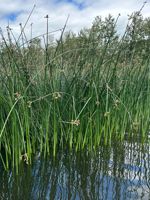
Common Cattail vs Hardstem Bulrush
Typha latifolia
Schoenoplectus acutus
CUSTOM GROW
NOT AVAILABLE THIS SEASON - MIGHT RETURN
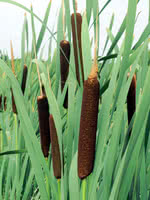
Cattail is found all across North America, growing next to water. Like other waterside plants, Cattail provides erosion control and forage for animals.
It is suitable for land reclamation. Cattail is able to tolerate cold weather and occasional flooding.
Hardstem Bulrush is a tall, native perennial wetland plant that thrives in shallow water and saturated soils, often forming extensive stands in wetland and shoreline habitats. Well suited to riparian restoration, bank stabilization, shoreline protection, and naturalization projects, it spreads through underground rhizomes to form dense colonies.
Hardstem Bulrush’s tall growth provides valuable cover and nesting habitat for waterfowl, songbirds, and small mammals, while its late-summer seeds provide food for waterfowl and other birds.