 Owned
Owned

Common Cattail vs Common Gaillardia (Blanketflower)
Typha latifolia
Gaillardia aristata
CUSTOM GROW
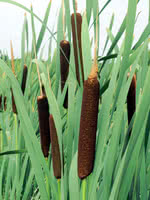

Cattail is found all across North America, growing next to water. Like other waterside plants, Cattail provides erosion control and forage for animals.
It is suitable for land reclamation. Cattail is able to tolerate cold weather and occasional flooding.
Common Gaillardia, also known as Blanketflower, is a native perennial wildflower known for its vibrant, daisy-like blooms. Flower petals vary in color from two-tone blooms with an orange-red center and yellow tips to solid yellow. Blooming from early summer to fall, it provides continuous color while attracting bees, butterflies, and other pollinators. The seeds also serve as a food source for birds, adding to its ecological value.
Common Gaillardia is easy to grow and can tolerate heat and drought. If flowering slows in the summer heat, cutting back the plant can encourage a new round of blooms in the fall. It is ideal for pollinator gardens, xeriscaping, naturalization projects, and ornamental plantings.