 Owned
Owned

Mon-Fri 9am - 5pm Mountain time
Cart reopens in October
Subscribe to our email list
to stay updated
Common Cattail vs Smooth Aster
Symphyotrichum laeve
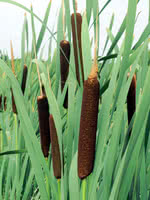
Typha latifolia
NOT AVAILABLE THIS SEASON - MIGHT RETURN
CUSTOM GROW
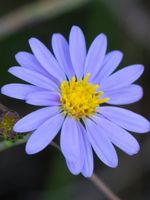
Smooth Aster is a native perennial wildflower known for its violet-blue, daisy-like flowers. They bloom later in the season, from late summer to early fall. The flowers attract a variety of pollinators, including bees, butterflies, and other beneficial insects. It also serves as a host plant for the Silvery Checkerspot (Chlosyne nycteis) and Pearl Crescent (Phyciodes tharos) butterflies, further enhancing its ecological value. This easy-to-grow wildflower is well suited for native wildflower gardens, pollinator gardens, and naturalization projects.
The Smooth Aster’s non-aggressive root system allows it to spread slowly, and it is more likely to reproduce by seed, which can be controlled through deadheading.
Cattail is found all across North America, growing next to water. Like other waterside plants, Cattail provides erosion control and forage for animals.
It is suitable for land reclamation. Cattail is able to tolerate cold weather and occasional flooding.