 Owned
Owned

Western Snowberry vs Water Arum
Symphoricarpos occidentalis
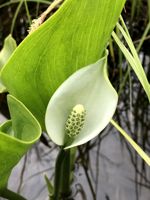
Calla palustris
NOT AVAILABLE THIS SEASON - MIGHT RETURN
CUSTOM GROW
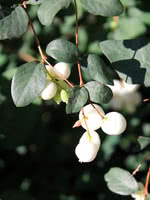
Like the Common Snowberry, the Western Snowberry is a small shrub with pink flowers useful for feeding livestock and preventing erosion. Unlike the common species, however, the Western Snowberry is much more suited to wet conditions, capable of persevering through poor soil drainage and occasional flooding.
After the Snowberry's flowers have bloomed, it produces berries which often last on the plant through winter. These berries are toxic to humans, but livestock and local wildlife love them! Those hoping to attract wildlife to their property can plant Snowberry and expect to see animals foraging on it much later in the year than other plants.
Water Arum is a native perennial wetland plant known for its showy white oval sheaths (spathe) that surround a yellow-green, cylindrical flower spike (spadix). It has large, oblong, heart-shaped leaves on stems that rise above the water from shallow, spreading rhizomes. The blossoms are followed in late summer by tiny, pear-shaped fruits that ripen to bright red, adding ornamental interest to wet habitats.
Water Arum provides food for birds and small mammals that eat its berries, and its flowers attract pollinators. It can tolerate cold climates and forms colonies in shallow water and saturated soils. It is well-suited for ecological restoration, riparian planting, naturalisation, and habitat projects in wet and shaded environments.