 Owned
Owned

Mon-Fri 9am - 5pm Mountain time
Cart reopens in October
Subscribe to our email list
to stay updated
Western Snowberry vs Brandon Cedar
Thuja occidentalis Brandon
Symphoricarpos occidentalis
NOT AVAILABLE THIS SEASON - MIGHT RETURN
NOT AVAILABLE THIS SEASON - MIGHT RETURN
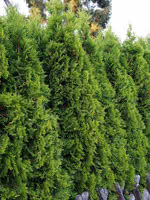
The Brandon Cedar is a columnar evergreen with soft, dense foliage that retains its bright green color all year round. It makes for a great vertical accent on your property or as part of a hedge, it is suitable for urban gardens due to its size and it is highly shade tolerant.
Like the Common Snowberry, the Western Snowberry is a small shrub with pink flowers useful for feeding livestock and preventing erosion. Unlike the common species, however, the Western Snowberry is much more suited to wet conditions, capable of persevering through poor soil drainage and occasional flooding.
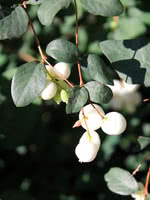
After the Snowberry's flowers have bloomed, it produces berries which often last on the plant through winter. These berries are toxic to humans, but livestock and local wildlife love them! Those hoping to attract wildlife to their property can plant Snowberry and expect to see animals foraging on it much later in the year than other plants.
Brandon Cedar Quick Facts
Western Snowberry Quick Facts
Toxicity: berries are toxic to humans