 Owned
Owned

Bog Birch vs Water Arum
Betula pumila
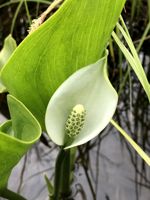
Calla palustris
NOT AVAILABLE THIS SEASON - MIGHT RETURN
CUSTOM GROW
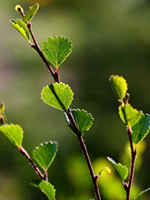
Bog Birch is a hardy, deciduous shrub native to North America. It thrives in wetlands, riparian zones, and boreal forests, and can be found as far north as the Arctic Circle—making it one of the few woody plants to grow in such extreme climates.
In Western Canada, it is especially common in moist lowlands, along streambanks, and in peatlands. Beyond its ecological role in stabilizing soils and supporting wildlife, Bog Birch is frequently used in reclamation and restoration projects due to its resilience and ability to establish quickly in disturbed or degraded landscapes.
Note: We use Bog Birch for Betula pumila. This species is also known by many other common names, including Dwarf Birch, Swamp Birch, and others. Please confirm the scientific name to ensure you are ordering the correct plant.
Water Arum is a native perennial wetland plant known for its showy white oval sheaths (spathe) that surround a yellow-green, cylindrical flower spike (spadix). It has large, oblong, heart-shaped leaves on stems that rise above the water from shallow, spreading rhizomes. The blossoms are followed in late summer by tiny, pear-shaped fruits that ripen to bright red, adding ornamental interest to wet habitats.
Water Arum provides food for birds and small mammals that eat its berries, and its flowers attract pollinators. It can tolerate cold climates and forms colonies in shallow water and saturated soils. It is well-suited for ecological restoration, riparian planting, naturalisation, and habitat projects in wet and shaded environments.
Bog Birch Quick Facts
Water Arum Quick Facts
Toxicity: toxic if ingested