 Owned
Owned

Mon-Fri 9am - 5pm Mountain time
Cart reopens in October
Subscribe to our email list
to stay updated
Silverberry (Wolf Willow) vs Twining Honeysuckle
Elaeagnus commutata
Lonicera dioica
COMING SOON
(new stock expected: fall of 2026)
CUSTOM GROW
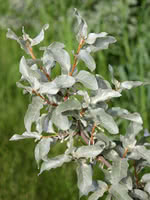
Silverberry (also known as Wolf Willow) is a common native North American shrub. This beautiful ornamental plant has characteristic silver leaves and fragrant yellow flowers.
Its silver berries remain on the branches through the winter. Silverberry is cold hardy and has some ability as a nitrogen fixer. It can grow on dry to moist sandy/gravel soils. This plant is very low maintenance.
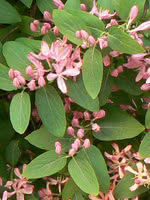
Twining Honeysuckle is a vine native to the forests of Canada and the United States.
It can often be found winding up the bark of large trees or spreading out as a ground cover where no supports are present. You will love the attractive, yellow-orange flowers with pink centers which turn into red, inedible berries.
Consider Twining Honeysuckle when trying to achieve a natural, spreading, unkempt look for your garden.