 Owned
Owned

Early Blue Violet vs Lewis Mock Orange
Viola adunca
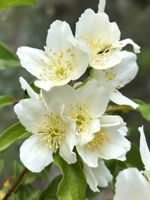
Philadelphus lewisii
NOT AVAILABLE THIS SEASON - MIGHT RETURN
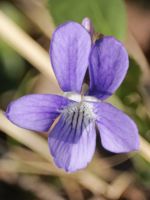
Early Blue Violet is a low-growing native perennial wildflower valued for its striking early-spring blooms. The flowers range in color from vibrant blue to deep violet, often marked with pale highlights and fine white hairs. They provide an important early nectar source for pollinators and serve as a host plant for several fritillary butterfly species.
It spreads by both seed and rhizomes, gradually forming small colonies. Its dark green, heart-shaped leaves add ornamental appeal, and the plant shows some resistance to deer browsing. Early Blue Violet is well-suited to naturalization projects and pollinator-friendly gardens, and has also been used in coastal butterfly habitat restoration in the Pacific Northwest.
Lewis Mock Orange is a flowering ornamental shrub that produces an abundance of white, fragrant blooms. The flowers have a sweet scent similar to orange blossoms, with a hint of pineapple. They bloom for several weeks from late spring to early summer, attracting pollinators and other beneficial insects.
Native to North America, Lewis Mock Orange is found from the southernmost portions of Alberta and British Columbia, and south into the northwestern United States. It makes an attractive shrub and can be used in hedgerows, pollinator gardens, and naturalization projects. Blooms occur on the previous year’s wood, so it is recommended to prune after it has finished flowering.
Early Blue Violet Quick Facts
Lewis Mock Orange Quick Facts
Toxicity: rhizomes, fruit, seed poisonous to humans