 Owned
Owned

Prairie Crocus vs Lewis Mock Orange
Pulsatilla nuttalliana (Anemone patens)
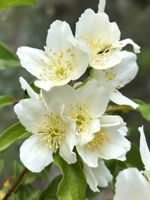
Philadelphus lewisii
NOT AVAILABLE THIS SEASON - MIGHT RETURN
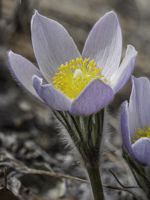
Prairie Crocus is a native perennial wildflower that is often considered one of the first signs of spring. The flowers can range from purple, pale blue, to white and often appear before the snow has fully melted. It can bloom a month earlier than other spring flowers, providing an early source of pollen for a variety of pollinators.
The plant is covered in woolly white hairs, including the finely divided leaves, giving them a silvery appearance. Prairie Crocus leaves do not fully emerge until after it has bloomed. The spent blooms transform into fluffy, feathery seed heads. During the hot summer months, the Prairie Crocus goes dormant and will repeat its life cycle the following spring.
The Prairie Crocus is Manitoba’s provincial flower.
Lewis Mock Orange is a flowering ornamental shrub that produces an abundance of white, fragrant blooms. The flowers have a sweet scent similar to orange blossoms, with a hint of pineapple. They bloom for several weeks from late spring to early summer, attracting pollinators and other beneficial insects.
Native to North America, Lewis Mock Orange is found from the southernmost portions of Alberta and British Columbia, and south into the northwestern United States. It makes an attractive shrub and can be used in hedgerows, pollinator gardens, and naturalization projects. Blooms occur on the previous year’s wood, so it is recommended to prune after it has finished flowering.
Prairie Crocus Quick Facts
Lewis Mock Orange Quick Facts
Toxicity: all parts toxic if eaten, sap can irritate skin