 Owned
Owned

Yellow Hedysarum vs Prairie Crocus
Hedysarum sulphurescens
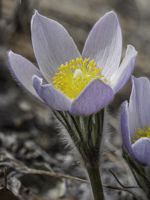
Pulsatilla nuttalliana (Anemone patens)
CUSTOM GROW
NOT AVAILABLE THIS SEASON - MIGHT RETURN
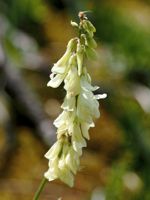
Yellow Hedysarum is a native perennial wildflower recognized for its clusters of pale yellow to creamy-white, pea-like blooms. Flowering from late spring into summer, it adds subtle colour to grasslands, roadsides, and open woods while attracting a variety of pollinators, especially bumblebees.
As a nitrogen-fixing plant, Yellow Hedysarum enriches soils and supports the growth of surrounding vegetation. Its deep taproot and extensive root system make it drought-tolerant and effective at stabilizing soil. Grizzly bears are known to dig up and eat the nutritious taproot. Its resilience and ecological value make it well-suited for restoration, naturalization, pollinator gardens, and erosion control projects.
Prairie Crocus is a native perennial wildflower that is often considered one of the first signs of spring. The flowers can range from purple, pale blue, to white and often appear before the snow has fully melted. It can bloom a month earlier than other spring flowers, providing an early source of pollen for a variety of pollinators.
The plant is covered in woolly white hairs, including the finely divided leaves, giving them a silvery appearance. Prairie Crocus leaves do not fully emerge until after it has bloomed. The spent blooms transform into fluffy, feathery seed heads. During the hot summer months, the Prairie Crocus goes dormant and will repeat its life cycle the following spring.
The Prairie Crocus is Manitoba’s provincial flower.
Yellow Hedysarum Quick Facts
Prairie Crocus Quick Facts
Toxicity: all parts toxic if eaten, sap can irritate skin