 Owned
Owned

Twinflower vs Prairie Crocus
Linnaea borealis
Pulsatilla nuttalliana (Anemone patens)
CUSTOM GROW
NOT AVAILABLE THIS SEASON - MIGHT RETURN
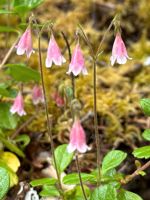
Twinflower is a native, trailing evergreen ground cover known for its delicate flowers that grow in nodding pairs. These pale pink blooms are described as being sweetly fragrant, attracting native bees and other pollinators.
Growing in cool, moist, acidic soils, the trailing stems form roots as they spread and start to form mats across the forest floor. Due to its woody stem, it is technically classified as a shrub and often referred to as a subshrub or dwarf shrub. This species is well-suited for naturalization, restoration, and conservation projects.
Twinflower (Linneae borealis) was named in honour of Carl Linnaeus, who adopted it as his personal emblem.
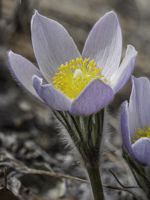
Prairie Crocus is a native perennial wildflower that is often considered one of the first signs of spring. The flowers can range from purple, pale blue, to white and often appear before the snow has fully melted. It can bloom a month earlier than other spring flowers, providing an early source of pollen for a variety of pollinators.
The plant is covered in woolly white hairs, including the finely divided leaves, giving them a silvery appearance. Prairie Crocus leaves do not fully emerge until after it has bloomed. The spent blooms transform into fluffy, feathery seed heads. During the hot summer months, the Prairie Crocus goes dormant and will repeat its life cycle the following spring.
The Prairie Crocus is Manitoba’s provincial flower.
Twinflower Quick Facts
Prairie Crocus Quick Facts
Toxicity: all parts toxic if eaten, sap can irritate skin