 Owned

Falsebox vs American Black Currant
Ribes americanum
Paxistima myrsinites
CUSTOM GROW
CUSTOM GROW
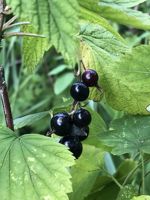
American Black Currant is a native deciduous shrub known for its clusters of small black berries that ripen in mid-to-late summer. The berries are edible and have long been used for fresh eating, preserves, and baking. They provide food for birds and mammals, and their fragrant spring flowers attract bees and other pollinators.
American Black Currant’s foliage serves as a host plant for butterfly species such as the Green Comma and Gray Comma, and its dense branching offers cover for wildlife. The shrub has traditionally been planted in shelterbelts, riparian buffers, and restoration projects.
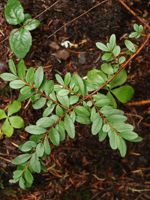
Falsebox is a hardy, native evergreen shrub found in forests, rocky slopes, and open woodland sites. Though small and easily overlooked among the leaves, the maroon flowers still supply nectar and pollen for pollinators such as native bees and flies. Blooming in spring, they provide an important early-season food source. Its year-round greenery adds visual interest through the winter.
Falsebox is a low-growing shrub that tolerates a wide range of conditions, including drought once established. It thrives particularly well beneath the shade of mature trees, where few other plants succeed. With its resilience and ecological value, Falsebox is well-suited for naturalization, restoration projects, and diverse landscape plantings.