 Owned
Owned

Small Cranberry vs Lewis Mock Orange
Vaccinium oxycoccos
Philadelphus lewisii
CUSTOM GROW
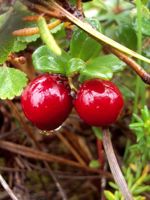
Small Cranberry is a native evergreen groundcover found in bogs, fens, and wet meadows. It produces delicate pink flowers that attract a variety of pollinators, including bees, and it serves as both a nectar source and host plant for the Bog Fritillary (Boloria eunomia) butterfly. By late summer, the plant bears deep red berries that are eaten by both wildlife and people. With their high pectin content, the berries are well-suited for making jams and jellies.
Often creeping among sphagnum moss, Small Cranberry thrives in cold, acidic, and nutrient-poor soils (pH 2.9–4.7), making it well adapted to northern wetland environments. With its woody stems, it is technically classified as a shrub and often described as a subshrub or dwarf shrub. It is also valuable for wetland restoration and naturalisation projects.
Note: We use Small Cranberry for Vaccinium oxycoccos. This species is also known by many other common names, including Bog Cranberry, Small Bog Cranberry, and others. Please confirm the scientific name to ensure you are ordering the correct plant.
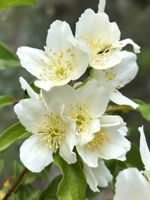
Lewis Mock Orange is a flowering ornamental shrub that produces an abundance of white, fragrant blooms. The flowers have a sweet scent similar to orange blossoms, with a hint of pineapple. They bloom for several weeks from late spring to early summer, attracting pollinators and other beneficial insects.
Native to North America, Lewis Mock Orange is found from the southernmost portions of Alberta and British Columbia, and south into the northwestern United States. It makes an attractive shrub and can be used in hedgerows, pollinator gardens, and naturalization projects. Blooms occur on the previous year’s wood, so it is recommended to prune after it has finished flowering.