 Owned
Owned

Mon-Fri 9am - 5pm Mountain time
Cart reopens in October
Subscribe to our email list
to stay updated
Small Cranberry vs Prairie Crocus
Vaccinium oxycoccos
Pulsatilla nuttalliana (Anemone patens)
CUSTOM GROW
NOT AVAILABLE THIS SEASON - MIGHT RETURN
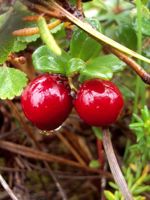
Small Cranberry is a native evergreen groundcover found in bogs, fens, and wet meadows. It produces delicate pink flowers that attract a variety of pollinators, including bees, and it serves as both a nectar source and host plant for the Bog Fritillary (Boloria eunomia) butterfly. By late summer, the plant bears deep red berries that are eaten by both wildlife and people. With their high pectin content, the berries are well-suited for making jams and jellies.
Often creeping among sphagnum moss, Small Cranberry thrives in cold, acidic, and nutrient-poor soils (pH 2.9–4.7), making it well adapted to northern wetland environments. With its woody stems, it is technically classified as a shrub and often described as a subshrub or dwarf shrub. It is also valuable for wetland restoration and naturalisation projects.
Note: We use Small Cranberry for Vaccinium oxycoccos. This species is also known by many other common names, including Bog Cranberry, Small Bog Cranberry, and others. Please confirm the scientific name to ensure you are ordering the correct plant.
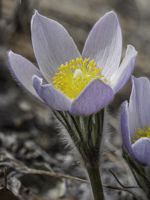
Prairie Crocus is a native perennial wildflower that is often considered one of the first signs of spring. The flowers can range from purple, pale blue, to white and often appear before the snow has fully melted. It can bloom a month earlier than other spring flowers, providing an early source of pollen for a variety of pollinators.
The plant is covered in woolly white hairs, including the finely divided leaves, giving them a silvery appearance. Prairie Crocus leaves do not fully emerge until after it has bloomed. The spent blooms transform into fluffy, feathery seed heads. During the hot summer months, the Prairie Crocus goes dormant and will repeat its life cycle the following spring.
The Prairie Crocus is Manitoba’s provincial flower.
Small Cranberry Quick Facts
Prairie Crocus Quick Facts
Toxicity: all parts toxic if eaten, sap can irritate skin