 Owned
Owned

Wild Bergamot vs Lewis Mock Orange
Philadelphus lewisii
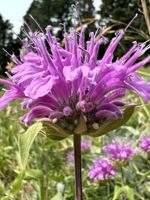
Monarda fistulosa
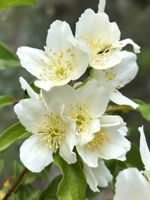
Lewis Mock Orange is a flowering ornamental shrub that produces an abundance of white, fragrant blooms. The flowers have a sweet scent similar to orange blossoms, with a hint of pineapple. They bloom for several weeks from late spring to early summer, attracting pollinators and other beneficial insects.
Native to North America, Lewis Mock Orange is found from the southernmost portions of Alberta and British Columbia, and south into the northwestern United States. It makes an attractive shrub and can be used in hedgerows, pollinator gardens, and naturalization projects. Blooms occur on the previous year’s wood, so it is recommended to prune after it has finished flowering.
Wild Bergamot is a native perennial wildflower that is known for its fragrant lilac-purple tubular flowers. The flowers grow in dense terminal heads and bloom from mid-summer to early fall. Deadheading spent flowers will encourage new blooms, prolonging its display. They attract pollinators such as bees, butterflies, and hummingbirds. It also serves as a host plant for the Raspberry Pyrausta (Pyrausta signatalis) butterfly.
Wild Bergamot belongs to the mint family, and its leaves, stems, and flowers are all edible. The leaves can be used to make tea or as a flavorful herb, with a taste often described as a blend of oregano and thyme.
It is resistant to deer and rabbits but can be susceptible to powdery mildew if planted too densely with poor air circulation. Wild Bergamot tolerates heat, drought, and poor soils, making it a low-maintenance addition to a variety of projects. It is well suited for pollinator gardens, wildflower gardens and naturalization projects.