 Owned
Owned

Sebastien Gooseberry vs Sweet Gale
Ribes uva-crispa Sebastien
Myrica gale
NOT AVAILABLE THIS SEASON - MIGHT RETURN
(new stock expected: fall of 2026)
CUSTOM GROW
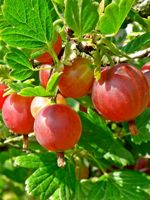
Sebastien Gooseberry is a nearly thornless variety that produces medium-sized, red gooseberries. When the berries are fully ripe they are quite sweet and great for fresh eating. They can be stored for up to two weeks in the fridge. For baking and preserves, they are often picked when under-ripe when they are firm and tart. The general harvest period is anywhere from July to September.
Sebastien Gooseberry is a Canadian variety that was developed at the Agriculture and Agri-Food Canada research station in Ottawa.
Gooseberries are self-pollinating but planting with another variety will increase yields.
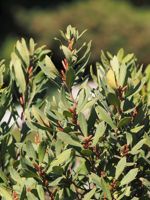
Sweet Gale is a native, nitrogen-fixing shrub known for its aromatic foliage. Tiny glands on the leaves release a balmy, bay leaf-like scent with floral and citrus notes. In spring, the yellowish male catkins provide one of the earliest sources of pollen for bees and other insects. While later in the season, the female catkins produce seeds that are eaten by waterfowl. Sweet Gale is dioecious, meaning male and female flowers occur on separate plants.
Sweet Gale thrives in wet, acidic soils and is commonly found along wetlands and lakeshores. It can help stabilize shorelines, while its dense growth provides valuable cover for wildlife. It is well-suited for naturalization, wetland restoration, and erosion control projects.
Sebastien Gooseberry Quick Facts
Sweet Gale Quick Facts
Toxicity: leaves are toxic to humans