 Owned
Owned

Mon-Fri 9am - 5pm Mountain time
Cart reopens in October
Subscribe to our email list
to stay updated
Common Hackberry vs Mountain Alder
Celtis occidentalis
Alnus incana subsp. tenuifolia
COMING SOON
(new stock expected: fall of 2026)
CUSTOM GROW
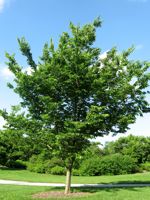
The Common Hackberry is a medium-sized deciduous tree that resembles the American Elm but is immune to Dutch Elm Disease. They are versatile and can adapt to a variety of growing conditions.
It produces purple-red, berry-like fruit with a large seed in the center. Both the sweet flesh, which tastes similar to dates, and the crunchy seed are edible. The fruit remains on the tree throughout the winter, offering a valuable food source for birds and other wildlife.
The Common Hackberry can also be a great addition to a pollinator garden. The tree itself is a host for the larvae of several butterfly species and the flowers provide a source of pollen and nectar.
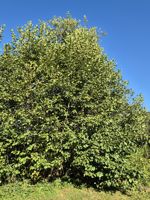
Mountain Alder is a native cold-hardy shrub or small tree often found along streams and in moist forested habitats. Its nitrogen-fixing ability enriches soils and supports surrounding vegetation, while its extensive root system helps stabilize streambanks and slopes. The fast growth rate allows it to establish quickly on disturbed sites, making it especially valuable in reclamation, restoration, and erosion control projects.
Often forming dense thickets, Mountain Alder enhances habitat quality in riparian and upland areas. It provides food and cover for various wildlife, including birds and small mammals. Recognized as an important species for soil and water conservation, it is well suited for riparian planting, naturalization, and ecological restoration.
Note: We use Sitka Alder for Alnus incana subsp. tenuifolia. This species is also known by many other common names, including Grey Alder, River Alder, and others. Please confirm the scientific name to ensure you are ordering the correct plant.