 Owned
Owned

Mon-Fri 9am - 5pm Mountain time
Cart reopens in October
Subscribe to our email list
to stay updated
Royal Star Magnolia vs Cloudberry
Magnolia stellata Royal Star
Rubus chamaemorus
NOT AVAILABLE THIS SEASON - MIGHT RETURN
(we don't know if or when this product will be restocked)
COMING SOON
(new stock expected: fall of 2026)
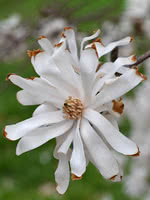
The Royal Star Magnolia, or Star Magnolia, is an early-blooming, white fragrant flower. It has a form that resembles a starburst, hence the name. This multi-stemmed deciduous shrub is extremely popular and has won the prestigious Award of Garden Merit from the Royal Horticultural Society.
The Royal Star Magnolia attracts birds and butterflies to your garden, with their large, showy flowers blooming even before it’s foliage which features a medium green leaf. They prefer slightly acidic soils.
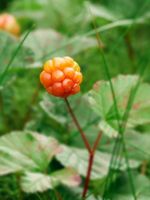
Cloudberry produces berries which taste tart and tangy with a sweet, floral hint. The berries have a creamy texture when overripe. They are often used to make jams, juices, and liquors. The berries are a pale red colour and when ripe turn more orange/amber. They do not grow very tall, generally reaching only 10-25 cm.
Cloudberry has distinct male and female plants. In order to produce berries, both must be present and pollinate with each other. Berries are produced at maturity, typically 5-7 years, and produce 1 berry per stem. The plant spreads naturally as they grow using modified underground stems (rhizomes), forming more plants over time in the same area.
This plant can be found wild in Canada’s boreal forest. In Newfoundland and Labrador, this plant is known as the Bakeapple and is a significant regional food. Similarly the Côte-Nord region of Quebec also has a long history of using this berry.
Note: Cloudberries require very specific soil conditions. They need well-drained soil with a pH between 3.5 and 5.0. Also sensitive to salt and dry conditions.
Note: Our seedlings are grown from seed and are too young to identify their sex.