 Owned
Owned

Bracted Honeysuckle vs White Fringe Tree
Chionanthus virginicus
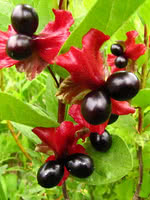
Lonicera involucrata
NOT AVAILABLE THIS SEASON - MIGHT RETURN
NOT AVAILABLE THIS SEASON - MIGHT RETURN
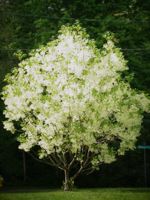
White Fringe Tree is known for its fringe-like white flowers. It can either grow as a small tree or a large multistemmed shrub. The White Fringe Tree has separate male and female plants. Both male and female flowers have white fringe-like petals, but the male flowers are longer and showier. The female flowers give way to clusters of dark blue to black berries. These berries are not edible for humans but attract birds and other wildlife.
The White Fringe Tree is tolerant of clay soils, saline soils, and air pollution but does not do well in prolonged dry conditions.
Bracted Honeysuckle is a shade loving shrub that is distinguishable from other honeysuckles by its square stem and pointed leaves. Native to most of North America, this honeysuckle is found along swamps, rivers, riparian zones and moist wooded areas.
If you have a erosion control project in mind, consider Bracted Honeysuckle.