 Owned
Owned

Mon-Fri 9am - 5pm Mountain time
Cart reopens in October
Subscribe to our email list
to stay updated
Creeping Oregon Grape vs Bracted Honeysuckle
Mahonia repens
Lonicera involucrata
CUSTOM GROW
NOT AVAILABLE THIS SEASON - MIGHT RETURN
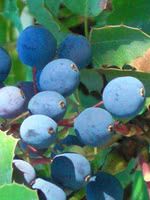
Creeping Oregon Grape is an excellent ground cover plant with attractive, dark green, holly-like leaves. It maintains its leaves throughout winter, which turn mauve, rose, and rust-colored. Clusters of bright, yellow flowers develop into dark, blue-purple edible berries ideal for juice or wine.
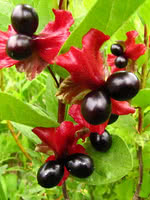
Bracted Honeysuckle is a shade loving shrub that is distinguishable from other honeysuckles by its square stem and pointed leaves. Native to most of North America, this honeysuckle is found along swamps, rivers, riparian zones and moist wooded areas.
If you have a erosion control project in mind, consider Bracted Honeysuckle.