 Owned
Owned

Mon-Fri 9am - 5pm Mountain time
Cart reopens in October
Subscribe to our email list
to stay updated
Winterberry vs Empress Tree
Ilex verticillata
Paulownia tomentosa
CUSTOM GROW
NOT AVAILABLE THIS SEASON - MIGHT RETURN
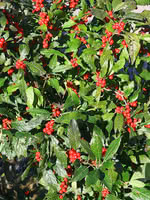
Winterberry is a small shrub that produces large quantities of bright red berries that remain on the plant through the fall and into the winter. Adding this shrub to your yard will give it a unique splash of color and attract birds, especially after the leaves drop.
Note: although the foliage is attractive on its own, you need at least one male plant near your female plants or they won't produce berries.
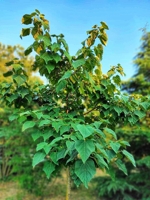
The Empress Tree is a fast growing, ornamental shade tree. It has purple, fragrant flowers that are quite attractive. The flowers emerge before the leaves in early spring. The leaves of this tree can grow very large, up to 30 cm long.
As one of the fastest growing trees in the world, this tree has been given considerable attention for carbon sequestration projects. It drops many seeds which can make it invasive in warmer climates. Please do some research and plant the right tree in the right place.
The Empress tree’s genus name comes from Princess Paulowna, daughter of Tsar Paul I of Russia.