 Owned
Owned

Mon-Fri 9am - 5pm Mountain time
Cart reopens in October
Subscribe to our email list
to stay updated
Wild Snowberry vs Japanese Quince
Symphoricarpos spp.
Chaenomeles japonica
CUSTOM GROW
NOT AVAILABLE THIS SEASON - MIGHT RETURN

Wild Snowberry is a mix of Common Snowberry and Western Snowberry. Each shrub's size, flower, and berry colour may vary.
This plant is abundant across the prairies. It can be planted alone or as a hedge in small yards. This shrub's ornamental berries persist into winter. Wild Snowberry can be a natural habitat and food source for various animals.
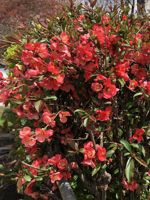
Japanese Quince has bright, orange to red showy flowers that bloom in early spring. The flowers appear before the leaves and may continue to bloom after leaves emerge. Flowers grow on old wood, so pruning after flowering will help to promote new growth next spring. They produce yellow-green fruit that taste bitter when eaten raw, typically they are better suited for making preserves.
It can be used as a stand alone ornamental shrub, as a low hedge, or can be trained to grow against a wall. In late winter, branches of Japanese Quince can be cut and brought indoors where they will bloom on their own. They are deer and rabbit tolerant. The branches are spiny making them well suited for keeping unwanted wildlife away.