 Owned
Owned

Mon-Fri 9am - 5pm Mountain time
Cart reopens in October
Subscribe to our email list
to stay updated
Bog Cranberry (Lingonberry) vs Golden Lights Rhododendron (Azalea)
Vaccinium vitis-idaea
Rhododendron x Golden Lights
COMING SOON
(new stock expected: fall of 2026)
NOT AVAILABLE THIS SEASON - MIGHT RETURN
(we don't know if or when this product will be restocked)
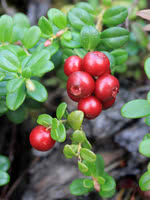
Bog Cranberry is a native, ground cover species. These plants generally produce one crop per year in summer. Plants may spread 3 feet in width forming a dense mat which makes it attractive as an ornamental ground cover.
Wild crops of Bog Cranberry are harvested each year in Newfoundland (more than 200,000 lbs/yr). Harvest of wild fruit can no longer keep up with demand. In Europe, 80 million pounds per year of this crop is grown or harvested from the wild.
Bog Cranberry flowers are similar in shape to those of blueberry and may be white or pink in color. These berries are considered to be highly flavored but not as tart as cranberries.
Check out our YouTube video of this plant in the fall: Fall Bog Cranberry.
Note: We use Bog Cranberry for Vaccinium vitis-idaea. This species is also known by many other common names. Please confirm the scientific name to ensure you are ordering the correct plant.
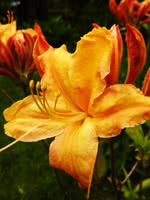
Golden Lights Rhododendron is an exceptionally cold hardy, deciduous azalea. Part of the Northern Lights Series, this shrub was cultivated specifically to withstand harsh winters, making it ideal for our prairie climate.
In late spring you'll be drawn to its beautiful, golden, sweetly fragrant flowers. Pruning is recommended after the flowers are spent to control the size and shape of this shrub.
Consider Golden Lights Rhododendron when planning your next hedge, or plant it on its own as a striking specimen plant.
Bog Cranberry (Lingonberry) Quick Facts
Golden Lights Rhododendron (Azalea) Quick Facts
Toxicity: All parts of a rhododendron bush, including the leaves, stems and blooms, are toxic to cats, dogs, and horses.