 Owned
Owned

Mon-Fri 9am - 5pm Mountain time
Cart reopens in October
Subscribe to our email list
to stay updated
Basswood (American Linden) vs Black Locust
Tilia americana
Robinia pseudoacacia
NOT AVAILABLE THIS SEASON - MIGHT RETURN
NOT AVAILABLE THIS SEASON - MIGHT RETURN
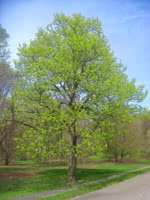
Basswood, also known as American Linden, provides shade and fragrant flowers with characteristically attractive leaves and branching.
It typically has a large uniformly round crown with a straight branch free trunk.
Basswood is typically found along streams and lakes or at the bottom of slopes where the ground is moist.
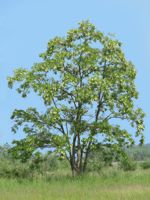
Black Locust is an attractive tree. Its distinctive leaves are made of about a dozen bright green leaflets. It also notable for its fragrant white flowers, which smell of citrus.
Black Locust can grow in many situations, but prefers dry areas with lots of sun. It is robust and is an excellent choice for establishing shade in dry, open areas.
Important note: Much of the Black Locust is toxic to humans and livestock, including seeds, bark, and leaves.