 Owned
Owned

Mon-Fri 9am - 5pm Mountain time
Cart reopens in October
Subscribe to our email list
to stay updated
Purple Leaf Sand Cherry vs Northern Bayberry
Prunus x cistena
Myrica pensylvanica
CUSTOM GROW
NOT AVAILABLE THIS SEASON - MIGHT RETURN
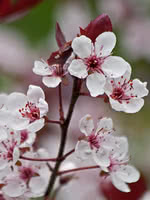
Purple Leaf Sand Cherry provides bright reddish-purple leaves that turn bronze-green in the fall. In the spring, tiny flowers with a pinkish white hue bloom. The flowers are small, but the impact comes from the shrub blossoming all at once.
The Purple leaf sand cherry can be susceptible to pests and diseases in more humid areas; a typical life span is approximately 15 years. Not suitable for a privacy hedge on its own but is often alternated with lilacs. Often used as an accent plant that attracts birds and bees.
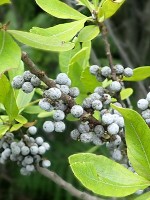
Northern Bayberry makes an excellent hedge or feature shrub. It will retain its leaves in warmer climates but drops them in colder areas. They produce blue-grey berries that have a wax coating on them that can be used to make candles or soaps.
In colder hardiness zones the leaves turn an attractive orange to red colour in the fall, making it a striking addition to your landscape.
Northern Bayberry is native to Nova Scotia and tolerates both drought and wet conditions. It is also a nitrogen fixer that tolerates poor soil conditions.
Purple Leaf Sand Cherry Quick Facts
Northern Bayberry Quick Facts
Toxicity: the leaves and seed are slightly toxic
Toxicity: Warning: The wax from bayberry fruit is considered toxic and may be carcinogenic.