 Owned
Owned

Mon-Fri 9am - 5pm Mountain time
Cart reopens in October
Subscribe to our email list
to stay updated
Creeping Juniper vs Bracted Honeysuckle
Lonicera involucrata
Juniperus horizontalis
NOT AVAILABLE THIS SEASON - MIGHT RETURN
NOT AVAILABLE THIS SEASON - MIGHT RETURN
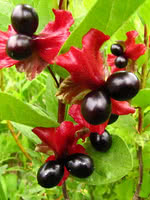
Bracted Honeysuckle is a shade loving shrub that is distinguishable from other honeysuckles by its square stem and pointed leaves. Native to most of North America, this honeysuckle is found along swamps, rivers, riparian zones and moist wooded areas.
If you have a erosion control project in mind, consider Bracted Honeysuckle.
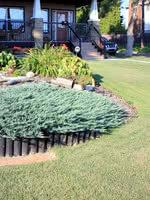
Creeping Juniper is a low maintenance, spreading, ground cover shrub capable of growing in some of the worst soil and rocky conditions.
You will love this shrubs' pleasant fragrance and year-round color. A beautiful accent or foundation plant, Creeping Juniper has scaly foliage and is commonly used by landscapers to add texture under trees or flower beds. Consider planting Creeping Juniper in areas where grass is difficult to mow or maintain.