Canadian Buffaloberry vs Twining Honeysuckle - TreeTime.ca

Canadian Buffaloberry vs Twining Honeysuckle

Lonicera dioica

Shepherdia canadensis

CUSTOM GROW

Twining Honeysuckle
Canadian Buffaloberry

Twining Honeysuckle is a vine native to the forests of Canada and the United States.

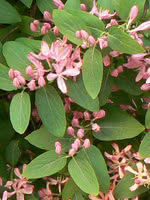
It can often be found winding up the bark of large trees or spreading out as a ground cover where no supports are present. You will love the attractive, yellow-orange flowers with pink centers which turn into red, inedible berries.

Consider Twining Honeysuckle when trying to achieve a natural, spreading, unkempt look for your garden.

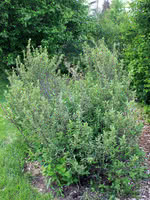
Canadian Buffalo Berry is a native deciduous shrub found throughout North America. This hardy, medium-sized shrub will tolerate poor soil conditions and produces attractive, edible–though very bitter–red fruit.

Twining Honeysuckle Quick Facts

Canadian Buffaloberry Quick Facts

Lowest Price: $6.99
Zone: 3a
Zone: 1a
Height: 1.8 m (6 ft)
Height: 3 m (10 ft)
Spread: 1.8 m (6 ft)
Light: shade, partial shade
Light: partial shade, full sun
Moisture: normal, wet
Moisture: dry, normal
Growth rate: medium
Growth rate: fast
Life span: short
Life span: short
Suckering: medium
Suckering: none
Maintenance: medium


Foliage: dark green with silver undersides
Flowers: tubular, yellow-orange
Flowers: tiny, red
Berries: round, red clusters
Berries: red bitter berries (edible)
Hybrid: no
Hybrid: no
Catkins: no
Catkins: no


Native to: AB, BC, SK, MB, ON, QC, YT, NT
Native to: AB, BC, SK, MB, ON, QC, NS, NB, NL, YT, NT, NU, PE
Other Names: glaucous honeysuckle, limber honeysuckle, wild honeysuckle
Other Names: canada buffalo berry, canada buffaloberry, canadian buffaloberry, foam berry, foamberry, russet buffaloberry, soap berry, soapberry, soopolallie