 Owned
Owned

Mon-Fri 9am - 5pm Mountain time
Cart reopens in October
Subscribe to our email list
to stay updated
Labrador Tea vs Oregon Grape
Rhododendron groenlandicum (Ledum groenlandicum)
Mahonia aquifolium (Berberis aquifolium)
NOT AVAILABLE THIS SEASON - MIGHT RETURN
NOT AVAILABLE THIS SEASON - MIGHT RETURN
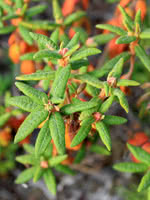
Labrador Tea is slow-growing evergreen shrub native to the boreal forests of Canada.
It thrives in wet, swampy conditions.
Labrador Tea has narrow, leathery, dark green leaves, topped by a cluster of white flowers in the spring. It is a perfect ornamental shrub for boggy, wet areas of your property.
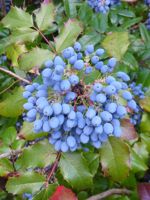
Oregon Grape is an evergreen shrub native to North America, found along the Pacific coast. In spring, the bright golden-yellow flowers appear in clusters above the leaves. These flowers eventually give way to edible blue berries in late summer. While not a true grape, the berries appear grape-like due to their colouring and clustered growth. They can be eaten fresh, but the sour taste and high amounts of natural pectin make them well suited for preserves.
The Oregon Grape has leaves that are glossy, leathery, and spiny-edged. This feature gives it its alternate name of Holly-leaved Barberry. When the leaves emerge in the spring they are a bronze-red colour. In the summer they transition to green, followed by bright red to deep burgundy in the fall. Leaves are retained throughout the winter and colder temperatures cause the leaves to turn purplish bronze, providing year round interest to the landscape.
Labrador Tea Quick Facts
Oregon Grape Quick Facts
Toxicity: slightly toxic if ingested