 Owned
Owned

Mon-Fri 9am - 5pm Mountain time
Cart reopens in October
Subscribe to our email list
to stay updated
Labrador Tea vs Borealis Haskap (Honeyberry)
Rhododendron groenlandicum (Ledum groenlandicum)
Lonicera caerulea Borealis
NOT AVAILABLE THIS SEASON - MIGHT RETURN
COMING SOON
(new stock expected: fall of 2026)
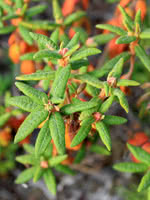
Labrador Tea is slow-growing evergreen shrub native to the boreal forests of Canada.
It thrives in wet, swampy conditions.
Labrador Tea has narrow, leathery, dark green leaves, topped by a cluster of white flowers in the spring. It is a perfect ornamental shrub for boggy, wet areas of your property.
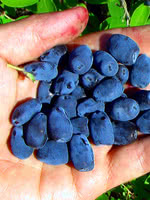
Borealis Haskap is a popular variety due to its great-tasting, sweet-tart berries. The flavour of Haskaps is generally described as a cross between a blueberry and a raspberry. Borealis Haskaps are well suited to fresh eating, baking, and preserves.
It has strong fruit holds and is not very firm so it does not do well when handled by equipment. This variety is a favourite for home gardens and U-Picks.
For optimal fruit production, cross-pollination is required. Haskaps need to be planted with a compatible variety. Compatibility is influenced by both bloom time and genetics.
Borealis Haskap is an early-pollinating variety and pairs well with Aurora and Honey Bee.
Labrador Tea Quick Facts
Borealis Haskap (Honeyberry) Quick Facts
Toxicity: slightly toxic if ingested