 Owned
Owned

Sea Buckthorn (Seaberry) vs Western Sand Cherry
Hippophae rhamnoides l.
Prunus pumila var. besseyi
NOT AVAILABLE THIS SEASON - MIGHT RETURN
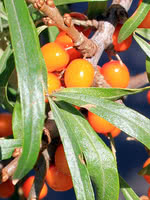
Sea Buckthorn, aka Seaberry, is a nitrogen fixing shrub that produces attractive berries high in vitamin C.
While we can't confirm claims that the berries are effective in treating various ailments, many people believe consuming the berries helps with arthritis, infections, and asthma, among other things.
Sea Buckthorn plants have attractive pale silvery-green leaves, dense branches, and large thorns, people like to grow in ornamental hedges or as a first row in a shelterbelt.
Note: Sea Buckthorn is dioecious, meaning male and female flowers grow on separate plants. Both are required for fruit production, though only female plants bear fruit. A plant’s sex typically cannot be identified until its third or fourth year. Our seedlings are too young to determine their sex.
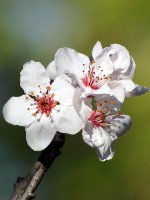
Western Sand Cherry is known for its unique, leathery grey-green foliage and beautiful white blossoms. It is a popular ornamental shrub in parks and front yards. Both you and the wildlife will love its edible small dark red to purple cherries.
Due to its small stature and spreading qualities, Western Sandcherry is suitable as an underplanting or groundcover.
Many people graft plum and cherry varieties to Western Sand Cherry and use it as rootstock. It is also popular to graft hardy apricots to.
Sea Buckthorn (Seaberry) Quick Facts
Western Sand Cherry Quick Facts
In row spacing: 0.9 - 1.2 m (3 - 4 ft)