 Owned
Owned

Scots Pine (Scotch Pine) vs Eastern Red Cedar
Pinus sylvestris
Juniperus virginiana
NOT AVAILABLE THIS SEASON - MIGHT RETURN
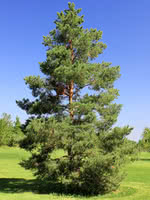
Scots Pine is a hardy, adaptable evergreen. This large tree has an oval crown and distinctively orange bark when mature. Scots Pine prefers dry to average moisture levels with very well-drained soil.
It is the most common pine tree used in shelterbelts and windbreaks. Scots Pine is also occasionally used as a Christmas tree variety.
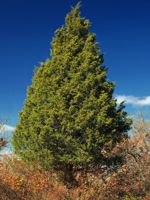
Eastern Red Cedar is native to eastern Canada and is actually a variety of juniper, not cedar. Its pyramidal crown, low hanging branches, and dense, compact foliage makes it an ideal windbreak or shelterbelt tree.
Eastern Red Cedar will attract wildlife to your yard and provide food and shelter for multiple varieties of birds. If you are on the east coast looking to create a windbreak, consider Eastern Red Cedar.
Scots Pine (Scotch Pine) Quick Facts
Eastern Red Cedar Quick Facts
In row spacing: 3 - 4 m (10 - 12 ft)