 Owned
Owned

Mon-Fri 9am - 5pm Mountain time
Cart reopens in October
Subscribe to our email list
to stay updated
Peking Cotoneaster vs Bebbs Willow
Cotoneaster acutifolia
Salix bebbiana
NOT AVAILABLE THIS SEASON - MIGHT RETURN
(new stock expected: fall of 2027)
COMING SOON
(new stock expected: fall of 2026)
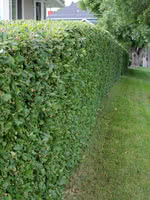
Peking Cotoneaster is a medium-sized shrub that is well adapted to colder climates. Best suited for use as a hedge, Peking Cotoneaster has dark green foliage that turns a stunning reddish orange in the fall.
Hardy fruit guru, Bernie Nikolai (DBG Fruit Growers), has started to recommend grafting hardy pear varieties to Peking Cotoneaster after his experiences were successful and produced fruit faster than other rootstocks. Remember to leave some nurse limbs if you try this.
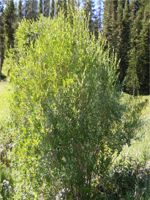
This large shrub is native to all of Canada and most of the United States. Its leaves are green on the top and grey on the bottom, and it produces catkin based flowers and non-edible fruit which appears very similar to a group of pine needles.
Bebb's Willow is foraged for by many species including elk, hares, beavers and various birds. It is commonly used to prevent erosion and protect aquatic environments due to its preference for shady, moist environments.
Peking Cotoneaster Quick Facts
Bebbs Willow Quick Facts
In row spacing: 0.3 m (1.0 ft)