 Owned
Owned

Mon-Fri 9am - 5pm Mountain time
Cart reopens in October
Subscribe to our email list
to stay updated
Peking Cotoneaster vs Green Alder
Alnus alnobetula subsp. crispa
Cotoneaster acutifolia
COMING SOON
(new stock expected: fall of 2026)
NOT AVAILABLE THIS SEASON - MIGHT RETURN
(new stock expected: fall of 2027)
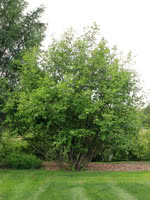
Green Alder is a native, cold-hardy shrub found in boreal forests, along slopes, and in open upland habitats. It fixes nitrogen in the soil, improving fertility and helping other plants grow, while its roots help stabilize slopes and disturbed ground. Fast to establish on poor soils, it is widely used in reclamation, restoration, and erosion control projects.
With its smooth grey bark and shiny green leaves, Green Alder often forms dense thickets that provide cover for birds and small mammals. Its seeds, buds, and catkins also supply food for wildlife. Green Alder is well suited for naturalization and ecological restoration.
Note: We use Green Alder for Alnus alnobetula subsp. crispa. This species is also known by many other common names, including Mountain Alder, Sitka Alder, and others. Please confirm the scientific name to ensure you are ordering the correct plant.
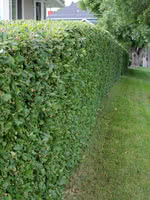
Peking Cotoneaster is a medium-sized shrub that is well adapted to colder climates. Best suited for use as a hedge, Peking Cotoneaster has dark green foliage that turns a stunning reddish orange in the fall.
Hardy fruit guru, Bernie Nikolai (DBG Fruit Growers), has started to recommend grafting hardy pear varieties to Peking Cotoneaster after his experiences were successful and produced fruit faster than other rootstocks. Remember to leave some nurse limbs if you try this.
Green Alder Quick Facts
Peking Cotoneaster Quick Facts
In row spacing: 0.9 m (3 ft)
In row spacing: 0.3 m (1.0 ft)