 Owned
Owned

Nanking Cherry vs Red Elderberry
Prunus tomentosa
Sambucus racemosa
NOT AVAILABLE THIS SEASON - MIGHT RETURN
NOT AVAILABLE THIS SEASON - MIGHT RETURN
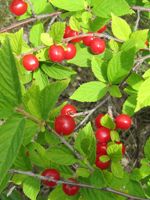
Nanking Cherry is a small deciduous shrub known for its attractive white blossoms and edible fruit. Its dark red berries are excellent for pies, jellies, and even fresh eating.
Nanking Cherry is highly regarded as a shade tolerant fruit. We often see it planted as a hedge on the north side of a house where few other plants will survive, let alone thrive.
Expect fruit mid to late July. The fruit can vary in sweetness and size considerably. We often hear that people prefer it to sour cherries. Perhaps this is because Nanking Cherry is more closely related to plums. In fact, it is sometimes used as a dwarfing rootstock for plums.
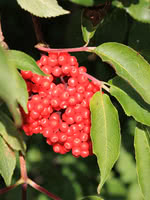
Red Elderberry is an attractive, medium-sized deciduous shrub.
It produces clusters of white flowers in the spring and bright red berry-like drupes, which provide beautiful contrast against its coarse, textured green foliage.
Red Elder can be pruned as a small single or multi-stemmed tree.
Nanking Cherry Quick Facts
Red Elderberry Quick Facts
Toxicity: toxic to humans